Nartak Media Group Logo – Advertising Agency Pittsburgh



Getting business recognition online requires a wide range of approaches, from organic to paid ads, all under one umbrella called Search Engine Marketing (SEM). These methods share the same goal: using a search engine to connect your business with customers.
Read on to learn more about the SEM, the different types of search engine marketing, and how to choose the proper way for your business.
Search engine marketing (SEM) is any strategy that helps your website appear in search results when people look for topics related to what you offer.
By using SEM effectively, businesses can get their product or service to show at the top of search engine result pages (SERPs) — this is where a lot can happen, from searching for what they’re looking for to finding your site, potentially making a purchase decision, and becoming your customer.
Now, when it comes to digital marketing, you may also have heard about SEO and PPC. How do they differ from search engine marketing?
Both are part of search engine marketing. S
EO is an organic process of improving your site’s visibility through creating high-quality content that answers people’s questions, fixing technical issues, such as site speed and mobile-friendliness, and building credibility through backlinks from reputable sites.
PPC, or paid search, on the other hand, is where businesses bid on keywords to have their ad appear at the top or bottom of the results page, usually marked as “Sponsored.” More on this in the next section.
 PPC advertising requires businesses to bid on keywords relevant to their product or services.
When someone searches for those terms, your ad has the chance to appear in the prime spots on the search engine results page. The word pay-per-click means you’ll only be charged when users click your ad.
So, if you see an ad on Google with the “sponsored” tag, that’s a PPC ad–and those businesses will get charged when you click on their advertising. Unlike SEO, where visibility is gained organically, with PPC, you’re essentially buying your spot to increase visibility.
Running a PPC campaign is more than just setting a budget to show your ads. There are other key elements to consider: Keywords, ad copy, landing pages, bids and budgets, and platforms.
Keywords: These are the search terms you want to target when customers make inquiries. For example, “best running shoes,” “organic market near me,” etc. Tools such as Google Ads help suggest keywords based on search volume.
Ad Copy: This is the actual ad copy. Include headlines, descriptions, offers, links, and call-to-action buttons. When creating an ad copy, ensure it’s attention-grabbing, concise, and includes a clear call to action.
Landing Pages: The page customers first “land” on when they click your ad. The page is usually where the offers in your ad copy appear. It needs to be fast-loading, mobile-friendly, and easy for users to find everything they need to convert them into buyers.
Bids and Budgets: When you bid on a PPC, you set a maximum per-click and campaign budget to help control spending. Businesses use automated bidding and AI to maximize conversions and optimize ad spend.
Platforms: Many are available. However, the big one is, of course, Google with billions of potential reach. However, there are also other options, such as Microsoft (Bing and Yahoo) and Amazon Ads.
If you need quick leads or sales, want to target high-intent keywords (such as “near me, “buy,” and “book now”), or are launching a new product and entering a new market, a paid search is preferable. PPC is the quickest way to get your business front and center when people are actively looking for what you offer.
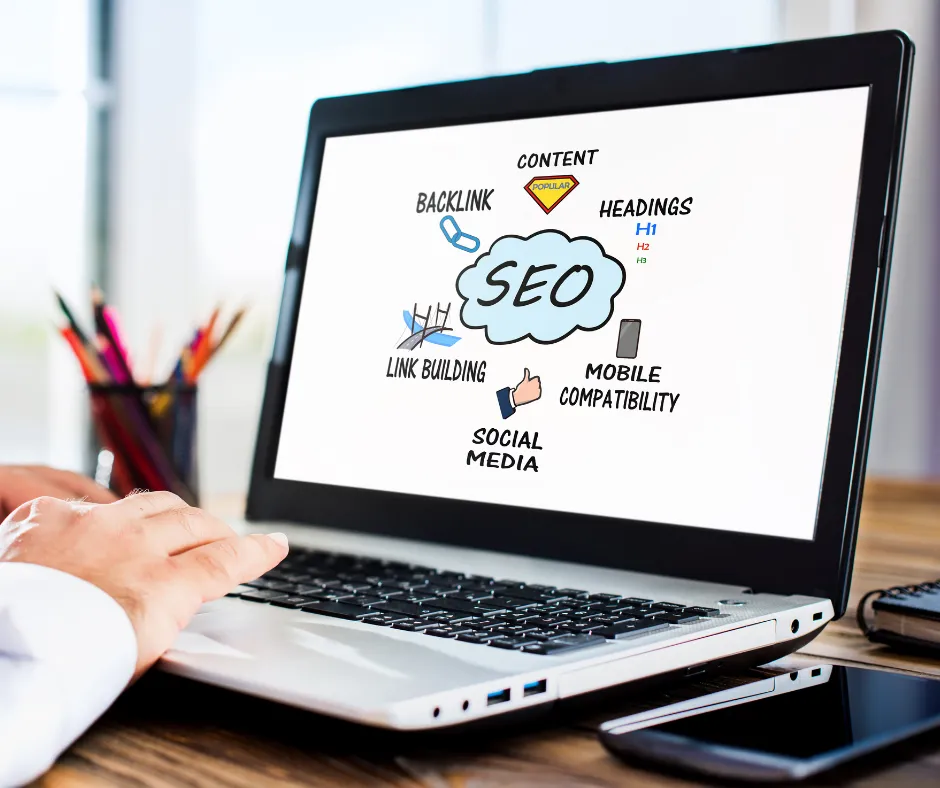 Unlike PPC, where you pay to get your brand on search engine result pages, with SEO, you have to earn your way to the top.
As we mentioned earlier, this is done in various ways, including ensuring your site is free of technical glitches, improving site speed, and including helpful, relevant content that addresses customers’ questions, concerns, and needs. All these steps make it easier for search engines to crawl your site, find the information that customers are looking for, and rank it higher on SERPs.
There are three core pillars in search engine optimization: On-page, technical, and off-page SEO.
On-page SEO refers to practices directly on individual pages that you control—for instance, optimizing headings and title tags, creating high-quality content, adding image alt text, and using clean URLs and internal links. All these steps make it clear to the search engine what your page is all about.
Technical SEO is the backend part of ensuring your site is on point. For example, ensuring the pages load, the site is mobile-friendly and responsive, and has proper XML sitemaps. This ensures search engines can smoothly access and crawl your site.
Off-page SEO means building website authority and trust outside the site itself. Off-page SEO best practices include earning backlinks from reputable sources. Growing your reputation can be done through content shared through social media, having partnerships, and guest posting.
Although the results of search engine optimization may take longer than PPC, once it starts working, the advantages can stack up and be long-lasting.
For instance, SEO efforts continue to deliver visitors month after month, year after year. Once your pages rank well for the right keywords, that traffic flows in without ongoing payments.
Furthermore, although SEO does require some investment, such as creating content or hiring SEO experts, there’s no pay-per-click involved. As your rankings improve, the cost per visitor ultimately comes out lower than with PPC.
Lastly, one of the most significant advantages is that people tend to trust organic content more, as they know it’s earned, not bought. Building this trust can lead to better engagement and loyalty, helping keep customers coming back.
Remarketing or retargeting is similar to paid advertising in that you pay to have your ads appear. However, it’s more personalized and timely as remarketing ads are shown to people who have already visited your site.
For example, if a user has visited your site to buy shoes but didn’t buy them, they can be shown the same product ads later with a more compelling offer, such as a discount code. A display campaign is the counterpart to text-based ads, using images, videos, and interactive banners.
Retargeting ads can follow users around different sites and even on social media. This type of search engine marketing can be done using Google Analytics or Google Tag Manager to track visitors.
Shopping ads, as the name suggests, are visual product listings that appear at the top of Google search results, on YouTube, in Gmail, and on other platforms.
They often include pictures, prices, ratings, and other essential information. Shopping ads are powered by platforms like Google Shopping, where you upload your product feed, and ads are created automatically based on searches.
Shopping ads blend the intent of search, use SEO practices to target the audience effectively, and excel in visual appeal, making it a popular go-to method for retailers looking to boost online visibility.
Deciding on which types of search engine marketing isn’t a one-way route.
Choosing which methods to pursue should always be based on your goals, both short-term and long-term. What’s crucial is to take the first step of defining your objective clearly. Once you have that figured out, match those goals with the right tactics.
Use paid search if you need fast results with a short timeline, for example, lead generation, seasonal promotions, product launches, or testing new markets. With PPC, you get immediate top-of-page visibility, precise targeting, and full control over messaging.
Search engine optimization, on the other hand, suits businesses that want sustainable growth, build brand trust, establish authority, and drive consistent traffic without ongoing spend. SEO requires patience, but with effective implementation, it’s worth the wait.
Use remarketing and shopping ads when you have site traffic (from paid or organic) but need to boost conversions…cart abandoners, past browsers, or seasonal shoppers. They extend reach visually and personally, often converting better than standard text ads for products.
These methods shine for nurturing and closing warm prospects.
Although there are clear steps for achieving an effective SEM strategy, we understand that different businesses have different goals and preferences. As a result, one-off tactics will not always work. Therefore, with Nartak, we provide a holistic SEM strategy, applying the best search engine marketing practices with a tailored focus approach that aligns with your needs, audience, budget, and end goals.
Contact our team today, and let’s start the journey of getting your brand out there and connecting with your audience!